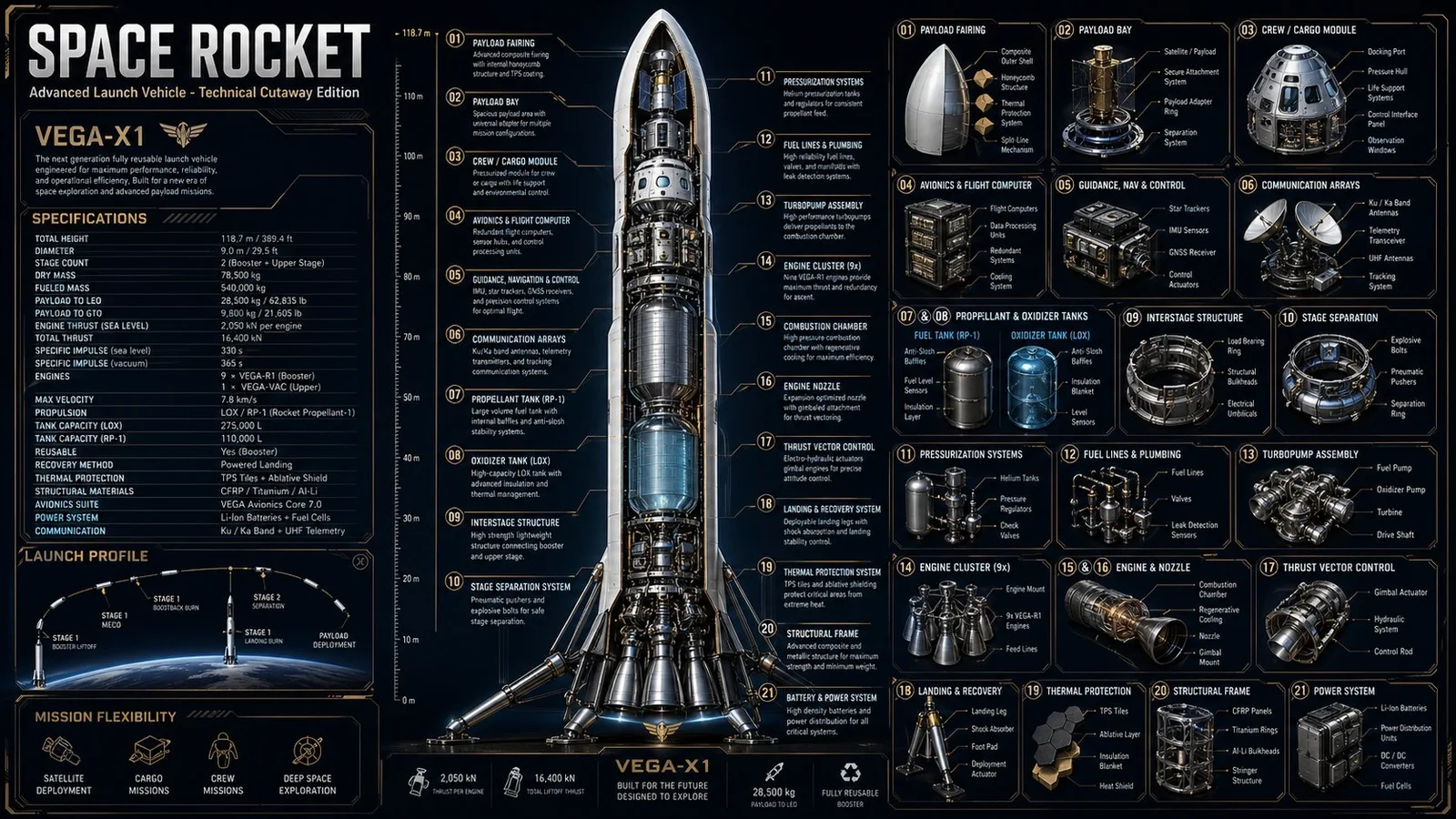
Space rocket technical cutaway infographic poster
- 0
- views
- 0
- copies
- Likes
- 0
- Views
- 0
- Copies
- 0
- Saved
- 0
- Model
- GPT Image 2
- Mode
- Text to image
- Resolution
- 1672 × 941
- Aspect
- 16:9
Create a premium, collector-grade technical infographic poster for a futuristic space launch rocket, designed with a luxurious aerospace engineering aesthetic and an ultra-detailed cinematic presentation. Main composition: At the center of the poster, show one massive full-body cutaway view of the rocket, vertically composed and dominating the design. The rocket should be presented like a museum-quality engineering masterpiece, with the outer shell partially removed so the internal architecture is clearly visible. The cutaway must reveal the major internal systems in a visually elegant and technically convincing way. Surrounding the central rocket, include multiple refined exploded-detail callout modules and isolated subsystem diagrams, each beautifully arranged around the poster like a high-end aerospace blueprint. These surrounding technical insets should break down the rocket’s major systems in a clean and visually compelling way. Required subsystems and breakdown modules: - payload fairing - payload bay or satellite deployment section - crew or cargo compartment if applicable - avionics and flight computer systems - guidance, navigation, and control systems - communication arrays and telemetry systems - propellant tanks - oxidizer tanks - pressurization systems - fuel lines and plumbing network - turbopump assembly - engine cluster - nozzle design and combustion chamber - thrust vector control system - stage separation mechanism - interstage structure - landing system or recovery system if reusable - thermal protection system - battery and electrical power distribution system - structural frame and internal reinforcement - aerodynamic fins or control surfaces if included Design language: The poster should feel like a fusion of: - elite aerospace engineering documentation - luxury product advertising - museum exhibition poster design - cinematic science-fiction realism The background should be clean and elegant, with a minimal premium feel. Use either: - a deep matte black, graphite, or midnight-blue background with glowing white and soft blue technical linework or - a bright clean architectural-white background with refined metallic-gray and cool-blue accents Visual tone: - ultra-detailed engineering illustration - highly polished infographic layout - elegant premium typography - sophisticated product showcase - cinematic lighting and subtle atmospheric depth - visually precise and beautifully organized - modern, futuristic, and luxurious Rocket rendering: The rocket should look highly advanced, sleek, and credible, with refined material finishes such as brushed titanium, carbon composite panels, ceramic thermal shielding, matte painted sections, precision fasteners, and intricate internal hardware. The internal systems should appear realistic, layered, and complex, with excellent visual hierarchy. Infographic content: Add highly detailed specification blocks and data panels throughout the design. These should feel authentic and high-end, not cluttered. Include elegant technical labels, fine leader lines, micro-annotations, and organized data tables. Suggested specification categories: - total height - diameter - dry mass - fueled mass - payload capacity to LEO - payload capacity to GTO - engine thrust - specific impulse - number of engines - stage count - propellant type - tank capacity - avionics suite - reusable capability - max velocity - heat shield composition - structural materials - launch profile - recovery method Typography: Use modern, premium, aerospace-style typography. Fonts should feel clean, expensive, and highly legible. The title should be bold and elegant, with a luxury-tech identity. Supporting text should look like collector-edition technical poster copy. Suggested title styling: Main title: “SPACE ROCKET” Optional subtitle: “Advanced Launch Vehicle - Technical Cutaway Edition” Layout: The central cutaway rocket is the hero element. Around it, organize subsystem breakdown diagrams in a balanced and symmetrical editorial layout. Use clean spacing, refined alignment, and visual rhythm so the poster feels curated and premium rather than busy. The infographic should look suitable for framing and display. Art direction: - ultra high resolution - razor-sharp details - refined contrast - subtle glow accents - cinematic highlights on metal surfaces - premium infographic polish - engineering precision with artistic beauty - collector poster aesthetic - no cheap stock-design feeling - no cartoon style - no cluttered UI look Important requirements: - Make every subsystem clearly readable and visually distinct - Ensure the central cutaway is highly detailed and impressive - Preserve a clean premium background - Keep the poster balanced, luxurious, and technically rich - The final result should feel like a high-end aerospace exhibition poster, combining scientific precision with cinematic visual impact
About this prompt
The image shows a tall rocket in cutaway view, surrounded by numbered subsystem insets, specification tables and a title block. The prompt suits a technical poster or an aerospace exhibition graphic.
Prompt breakdown
Made by AI · Click a part to highlight it in the promptTap a part to highlight it in the prompt
How to use this prompt
Three steps from this page to your own image.
- PROMPTTranslateSaveCopiedCreate a premium, collector-grade technical infographic poster for a futuristic space launch rocket, designed with a luxurious aerospace engineering aesthetic…01
Copy the prompt
Copy the text as it is, every detail and any text on the image included.
GPT Image 2ModeText to imageResolution1672 × 941Aspect16:9
02Match the settings
Open GPT Image 2 on a platform that offers it and use the same settings: text to image, 1672 × 941, 16:9.
- Studio · Make it yoursSame scene, but with my own subject and colorsWrite my prompt