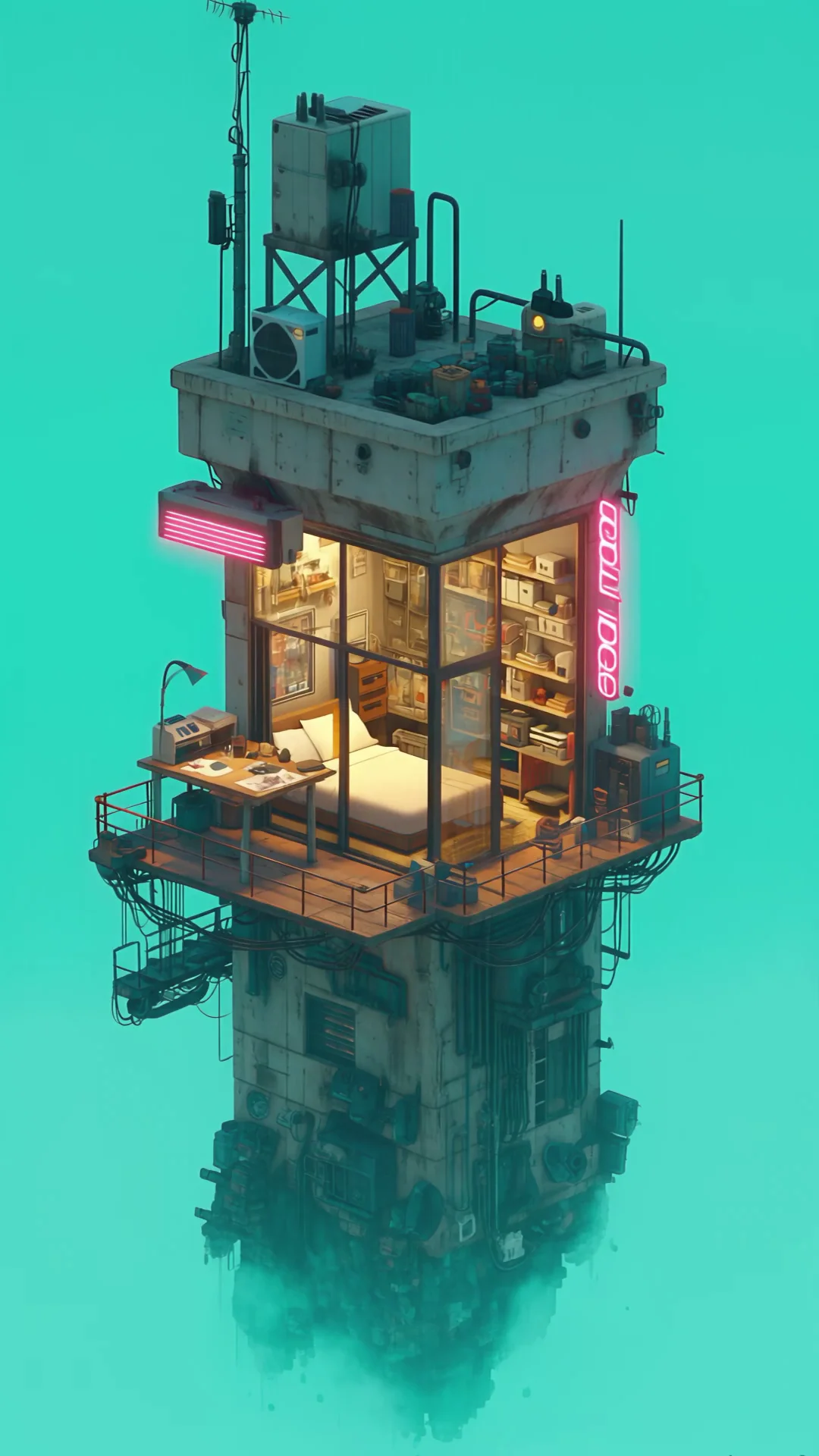
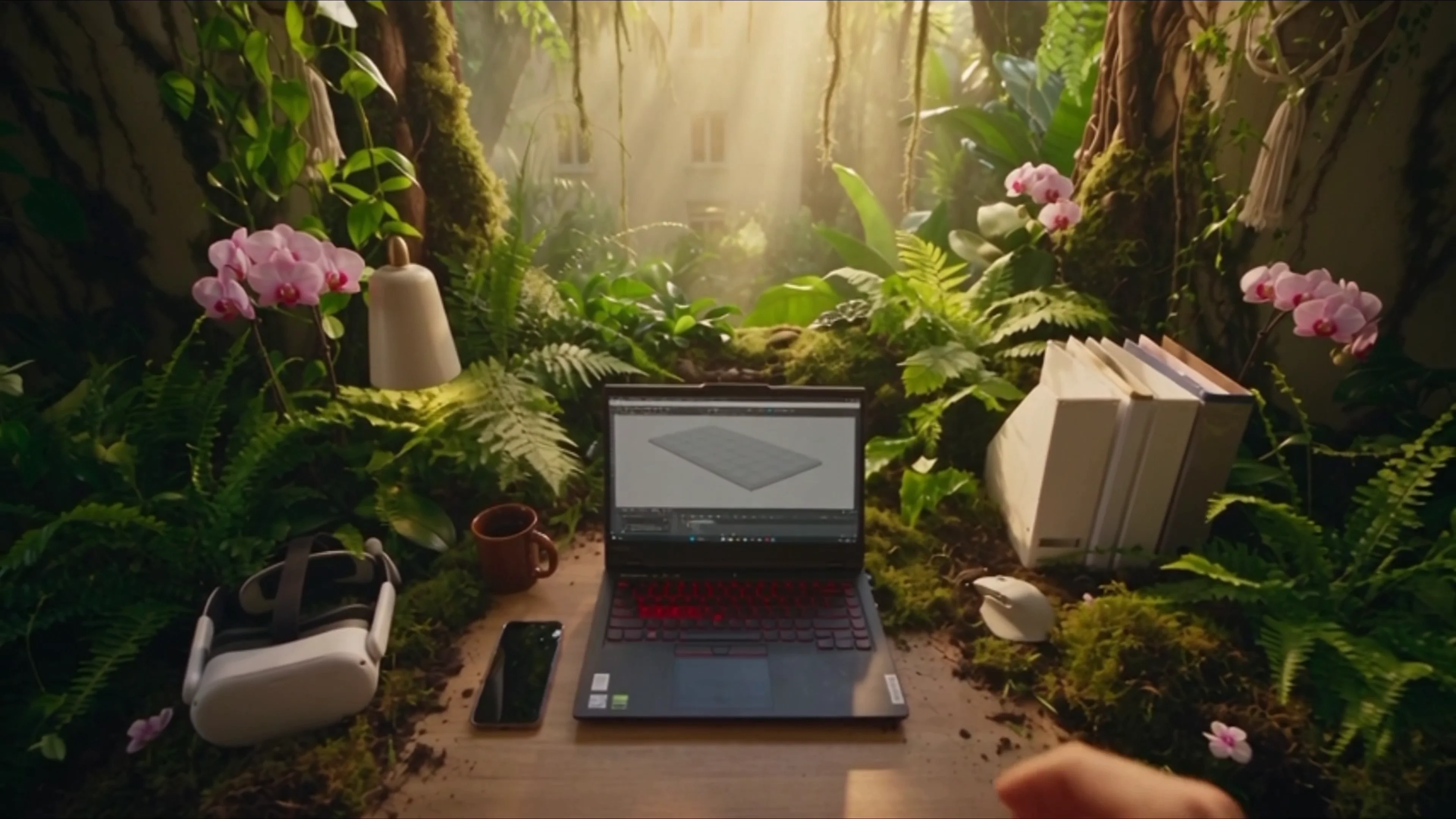
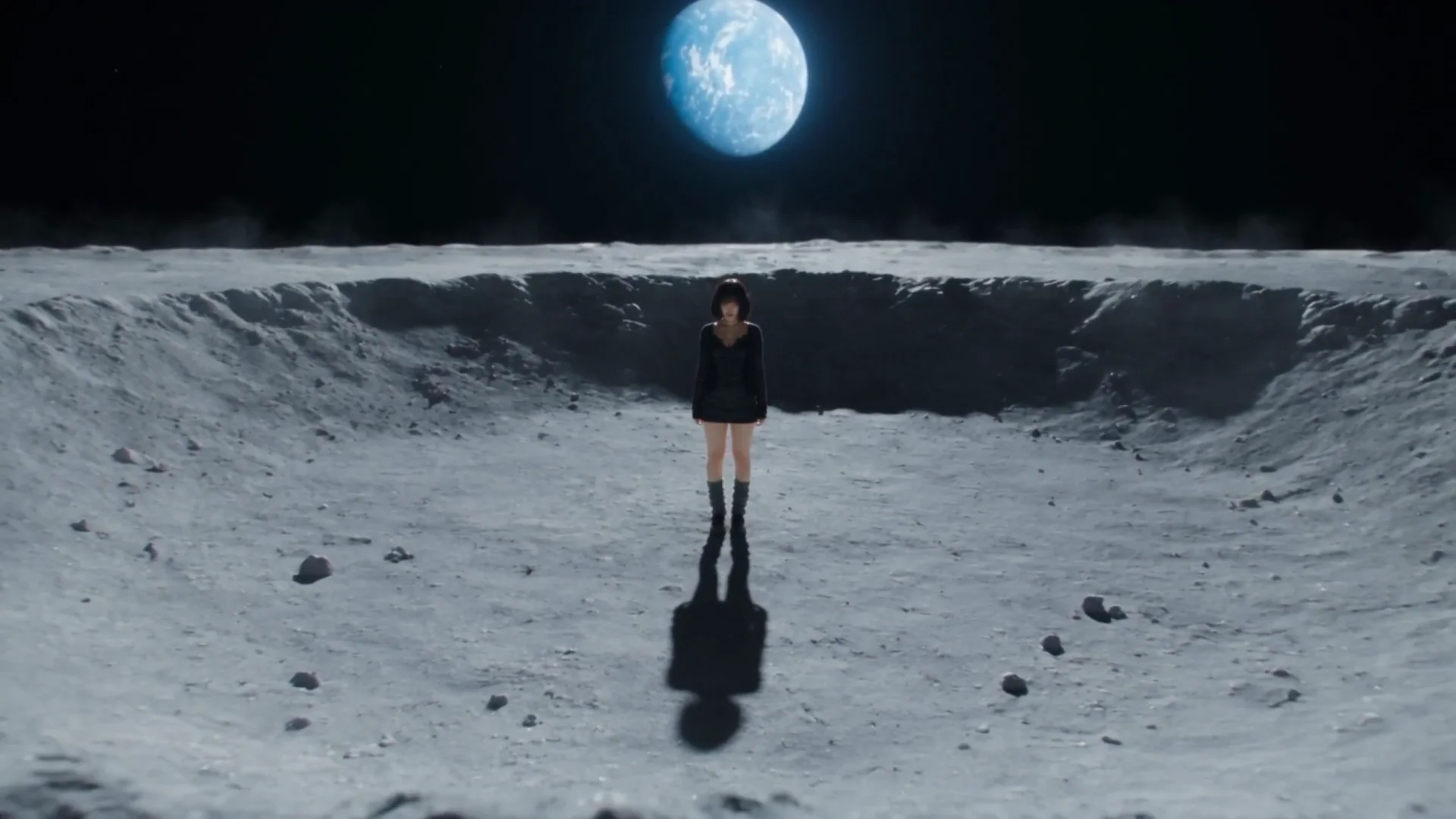
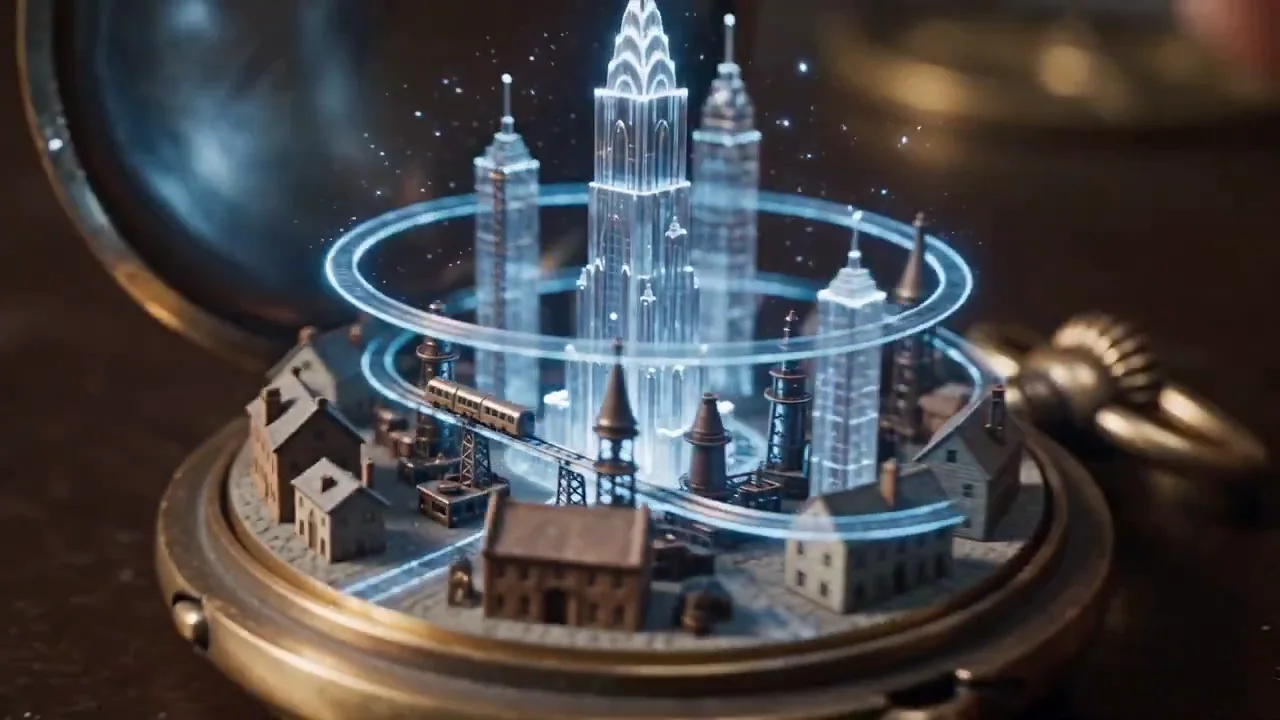
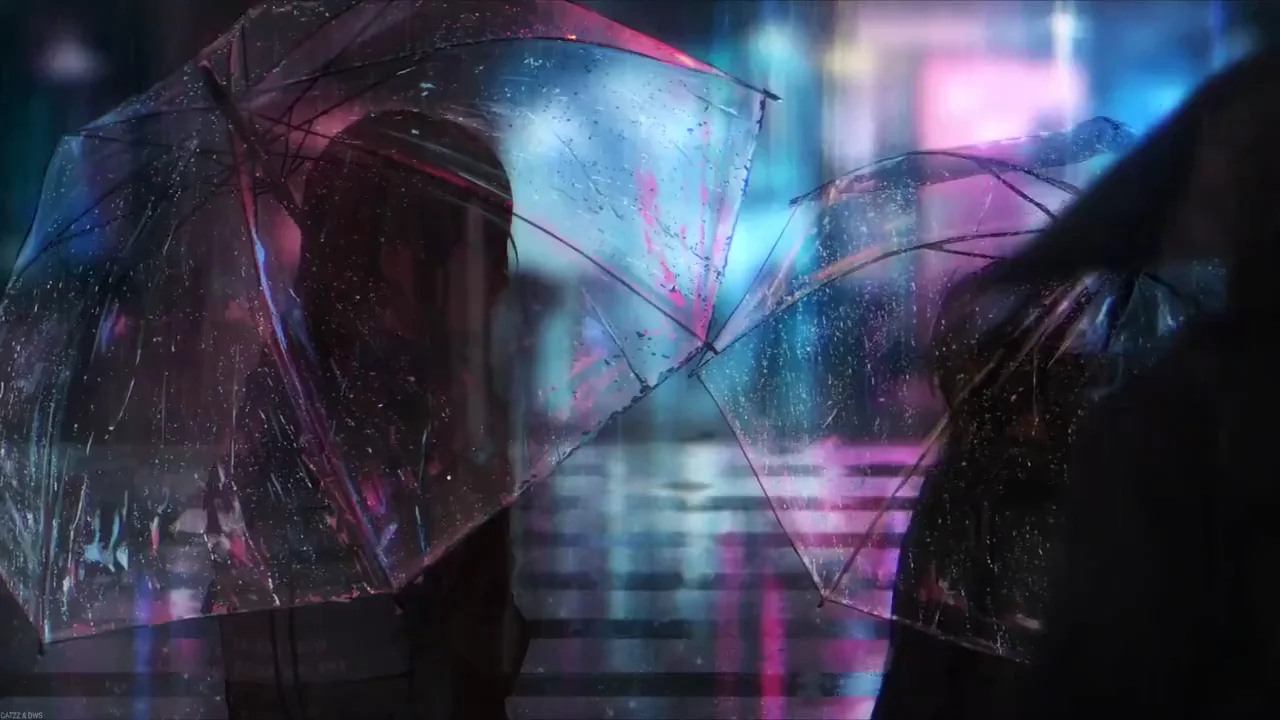
Single-file HTML webpage artwork "Click Once, the World Cracks", native WebGL2, no external libraries/images/fonts/assets, all generated in real-time by fragment shaders. Portrait 9:16 centered and full-screen, full-screen no UI, adapted for mobile touch. Four worlds (same fragment shader switched via uniform): 1) Rainy night window glass macro, like phone photography: three layers of water droplets (small static droplets slowly appear and disappear; two layers of large droplets sliding downward in jerks, dragging out water trails and small droplet strings); window outside completely defocused night street scene using random circular bokeh light spots, large size variation, primarily warm yellow street lamps and warm white lights, with some cold white and red tail lights, dotted with pink-cyan neon, light spot edges slightly bright, blurrier larger and darker, brightness slightly flickers, some light spots like car lights slowly moving left and right, overall dark like night shot; glass has thin mist, water droplet trails wipe away mist and background becomes clearer; droplets are transparent small lenses not frosted, using droplet height field gradient to significantly reverse-offset background sampling, each droplet reflects shrunken inverted brighter street light spots, with dark thin edges and small highlight dot in upper left corner. 2) Snowy night Forbidden City stylized restrained with depth: night darkens, sky transitions from dark dusty purple at horizon to deep blue-black at top, moon in upper left corner blurred by snow mist; center double-eave hip roof main hall slightly dark backlit, roof thick snow illuminated by moonlight into cold blue, eaves reveal golden glazed tiles, dark red pillars and lattice doors between emit warm yellow light with slightly different brightness per section, four red lanterns under eaves each cast a visible light column in falling snow and thin mist, distant halls on both sides mostly eaten away by fog; foreground perspective accumulated snow plaza, center swept-away wet stone path leads to steps, road surface reflects lantern warm color inverted, snow has fine sparkle points, ground mist layer near horizon; far, mid, near three layers of falling snow plus several large snowflakes very close to lens completely defocused; far scene, main hall, lanterns have slight parallax shift at different speeds. 3) Space viewing Earth sunrise: more than half the Earth in lower part of frame, horizon line is curved arc, sun just rising from Earth edge with star rays and halo; Earth mostly night side, landmass generated using 3D noise, coastlines and city clusters have golden city lights, clouds in night are dark blue; terminator line is narrow orange-red band, Earth edge blue atmospheric glow becomes orange-white near sun, background starfield. 4) Black hole like Interstellar real gravitational lensing: for each pixel emit light ray from camera, progressively bend and integrate following Schwarzschild ray equations a=-1.5·h²·r/|r|⁵ approximately 170 steps, step size smaller when closer, light ray accumulates accretion disk color each time crossing disk plane, falls into event horizon as pure black, escapes by sampling starfield and nebula using final direction; camera slightly above disk plane, far end of accretion disk naturally bends around black hole top and bottom forming light ring and distorting background starfield; accretion disk uses noise for turbulent streaks, inner circle white-hot outer circle orange-red, near side brighter and more blue due to Doppler effect; subsequently black hole shrinks and collapses spinning faster and faster compressing into dazzling bright point with cross star rays. Cracking core: each click centers on click position using Voronoi to cut fragments; first time simulates real glass impact cracks, around 30 dense small seeds near click point form crushed white debris, outside are dozen or so radial spokes with seeds, spoke angles randomly jitter each ring, more spokes further out (13→19→27 like crack branching), ring radius increases by 1.4~1.6x multiplier; when cutting Voronoi record each edge's adjacent seeds, between different spokes in same ring draw only radial cracks at about 60% probability, between adjacent rings in same spoke draw circular cracks only near center in few segments, other edges not drawn; latter two clicks have increasingly fragmented distribution closer to click point. Each glass fragment is glass prism with thickness, thickness varies with size, front face entirely adheres to same plane ensuring unbroken seamless; front is current world, back is next world, flip to see through to next world; side faces polished glass thick edges, sample own frame with shallow green glass color, overlay see-through next world, strong mirror-like highlights and Fresnel, bright beveled highlight at junction between side and front face. Finger has three clicks, pure code: separate half-resolution pass ray-step hand SDF——index finger three-segment tapered capsule (fingertip slightly thin tapering to root getting thicker, joint lightly curved, cross-section slightly flattened), plus curved middle finger and hand mass nearby, much closer to camera almost completely blurred only shadow edge visible at screen edge; this pass outputs premultiplied alpha finger color and per-pixel diffusion circle radius (0 at fingertip touching glass, larger approaching camera maximum about 46px); final composite depth of field: each pixel first find largest diffusion circle in surroundings that covers itself, then in that radius disk sample by golden angle spiral averaging (first generate mipmap pre-blur to avoid streaking), finger root blurs into soft light spot semi-transparent edge only fingertip clear; subdued backlit silhouette, finger front very dark only thin warm translucent edge ring (edge reddish subsurface scattering), light source color changes with world (rainy night window outside warm street lamp plus cyan neon, Forbidden City neutral lantern warm light plus cool moonlight not too orange, space cold blue Earth light plus warm sun edge); skin uses noise for subtle spotting and reddish regions, fingertip joints more red, faint wrinkles on joint back; nails shallow pink slightly raised ellipse, front section white fingernail tip, nail root slightly darker band, only fine highlights; timing: before click about 0.5 second finger diagonally extends from bottom edge increasingly slow as closer, at contact moment fingertip flattens pressed on glass (SDF truncated by glass plane) glass slightly indents inward, cracks emanate from fingertip, about 0.15 second later finger accelerates downward and back toward camera, hand already left when fragments fly; glass obscured by finger has faint shadow ring. Click moment: about 0.25 second before click glass at click point slightly indents like magnifying glass magnifying image behind, at hit instant very short weak flash plus glass interior diffused refraction ripple; center clear sharp crisp debris cluster, main radial cracks emanate from click point to screen edge within about 0.4 seconds real time, only then circular cracks appear near center, below fingertip a cluster of crushed star-shaped debris; cracks thin, transparent, slightly jagged, non-glowing non-lightning-like, cracks themselves are thin dark core plus two sides refracted brightened background brightness following image, main cracks only slightly prominent, scattered small flashes along line, fainter further out, absolutely no white lines drawn; glass cracks then pauses momentarily, fragments then fly, camera slightly shakes. Time curve: 0.1 second after click normal, drops to 0.2x slow motion about half second, then accelerates back to normal. Scatter: radial outward from click point plus toward-camera speed, faster the closer, meanwhile rotate around random in-plane axis, slight gravity, speed exponentially decays fast then slow, fragments stay on-screen; behind opening space slowly reveals next world blurred image. Glass quality: rotate offset texture coordinates by normal for refraction, RGB channels different offset for dispersion; front edge use screen space derivatives deflect normal outward for beveled highlight and rainbow dispersion; front about 40% transparent can see through to back world with refraction offset; highlights fine and sharp cannot be large oily plastic feeling, two-light specular highlights clamped cannot be entire block blown-out white, Fresnel reflection. Regrouping (first and second): fragments in polar coordinates centered on click point roll back to original position (radius angle depth interpolated together with smootherstep easing) total rotate integer circles, when fragments side face directly toward camera switch front texture to next world, land exactly splicing new image, after landing no seam description directly seamless switch to new world real-time image. Upgrade: first window glass spider-web cracks scatter toward camera; second fragments many more directly rush past camera, regrouping spirals back from behind camera; third all fragments first explode outward, then spiral around screen center sucked into black hole spinning faster and faster smaller until disappear; black hole collapses into bright point then fragments spray out along spiral trajectory reverse from point, rotating and enlarging flip back front paste 1st world rain window, finally before returning to position opening space first reveals rain window, fragments slightly enlarge fill seams and change to sample rain window image by screen coordinates, within 6-8 frames seams completely vanish seaming into opening complete rain window loop seamlessly without circular transition. Post-processing: render to RGBA16F float texture, fragment stage 4x MSAA, 3 subframe motion blur accumulation (shutter about 0.7 frame), two-level bloom, ACES tone mapping, vignette, slight film grain, few frames after click add chromatic aberration, no UI elements except press and hit ripples. Interaction recording: ignore new clicks during animation; when URL has?capture skip real-time loop, provide window.__frame(t) render specified frame at fixed time, click times hardcoded 0.5 second, 5.6 second, 10.6 second, total length 15.2 seconds (opening 0.5 second finger extends), convenient for frame-by-frame recording into loopable video.